
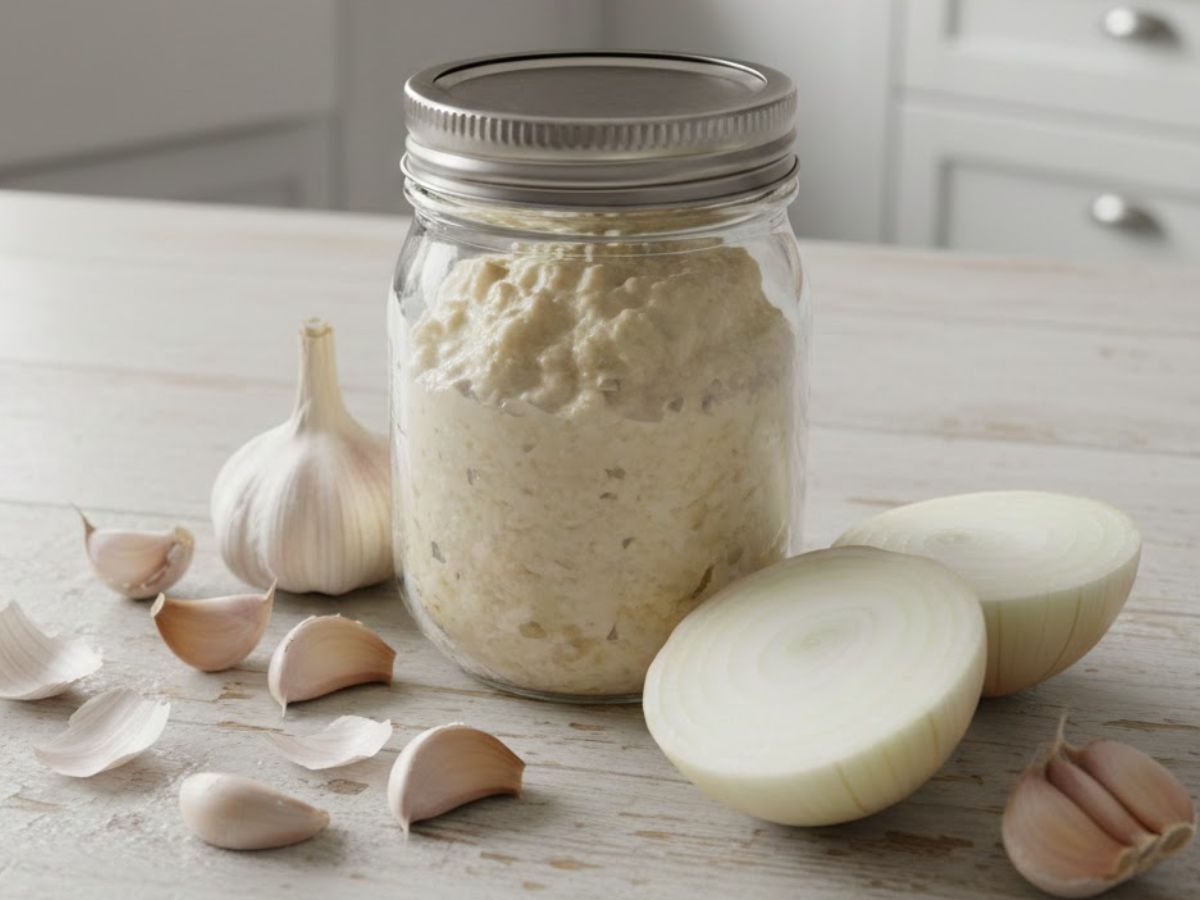
Base de Alho e Cebola Brasileira (Uso Diário)
In Brazilian home cooking, meals don’t usually start with a recipe — they start with garlic and onion. This base appears quietly at the beginning of countless dishes, from rice and beans to stews, chicken, and ground beef.
Rather than chopping garlic and onion from scratch every time, many Brazilian households prepare a simple base in advance. It’s practical, time-saving, and creates consistency across everyday meals.
This recipe shows how this base is commonly prepared and used in Brazilian kitchens, especially outside Brazil, where adapting routines matters as much as ingredients.
About this dish
The garlic and onion base is not a finished dish, but a foundation. It’s rarely discussed on its own, yet it defines the flavor profile of Brazilian everyday cooking.
In Brazil, this base may be prepared fresh daily or kept ready in the fridge, depending on routine. Some versions are raw and blended, others lightly sautéed. What stays consistent is its role: it replaces the need to season from scratch every time cooking begins.
Outside Brazil, this base becomes even more practical, helping recreate familiar flavors using local ingredients and faster methods.
Before you start
This base is meant to be neutral and flexible, not aggressively seasoned. It should support recipes, not dominate them.
A raw blended version lasts longer and works well for rice, beans, and quick sautés. A lightly cooked version develops deeper flavor but should be used more quickly.
Both versions are common in Brazilian kitchens — the choice depends on routine.
For kitchens outside Brazil: practical notes
Garlic and onion are widely available worldwide, which makes this base one of the easiest Brazilian techniques to adopt abroad.
Neutral vegetable oil works best. Olive oil is acceptable for everyday use, but strong-flavored oils should be avoided so the base remains adaptable across dishes.
A food processor or blender simplifies preparation, but the base can also be finely chopped by hand if needed.
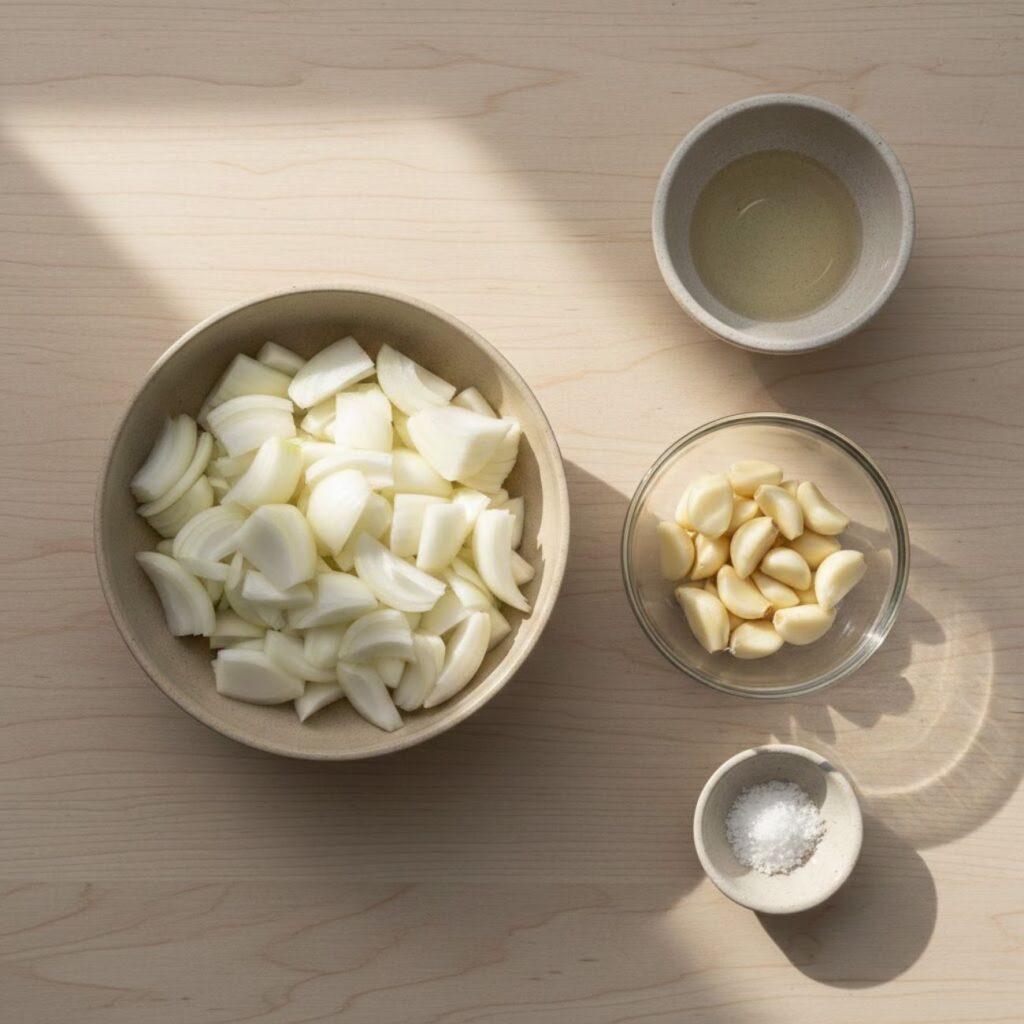
Ingredients prepared before cooking
Brazilian Garlic & Onion Base
Ingredients
Method
Method (Raw base — most common)
- Add the onion, garlic, oil, and salt to a food processor or blender.
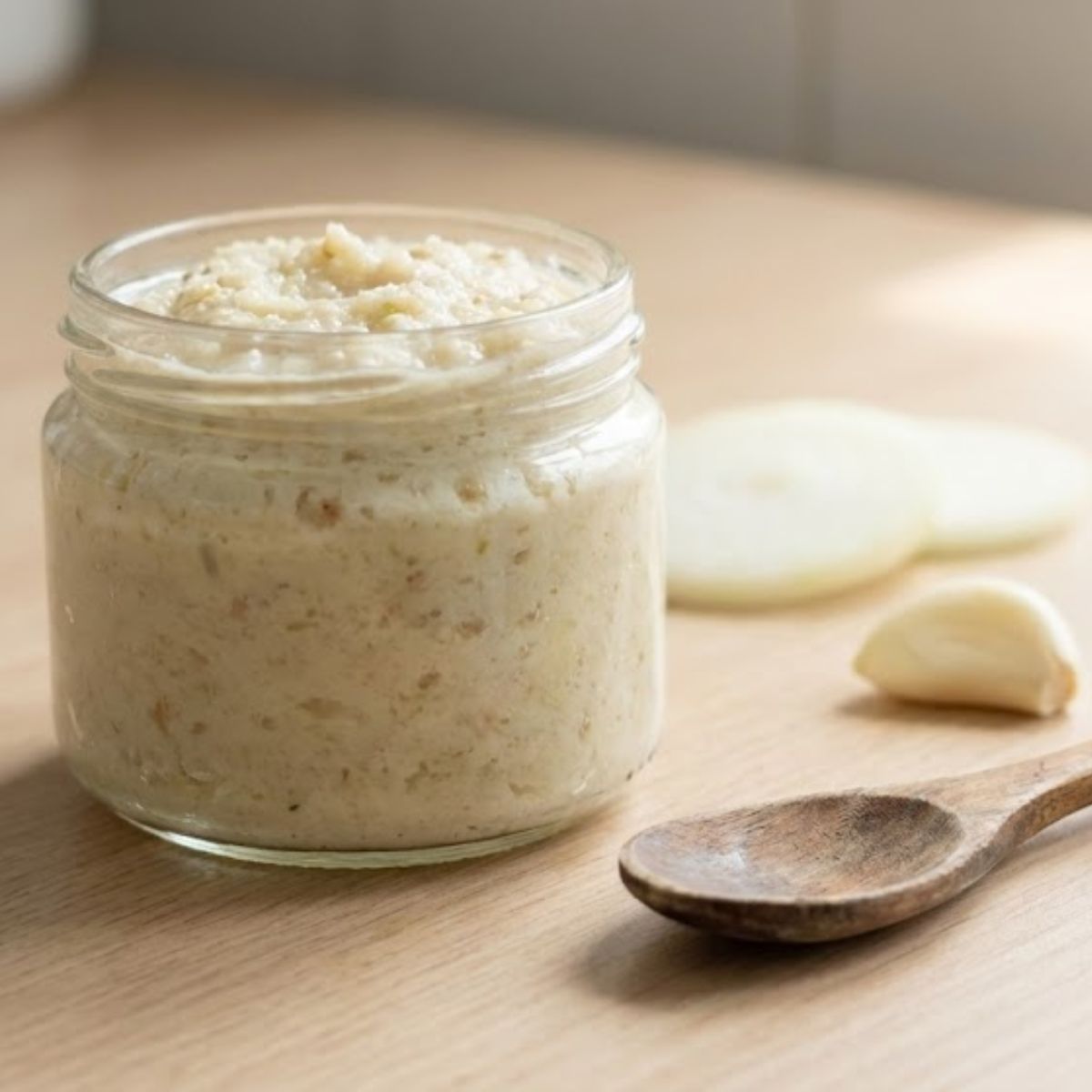
- Pulse until a coarse paste forms.
- Transfer to a clean glass jar with a tight lid.
- Store refrigerated and use as needed.
Optional method (Lightly cooked base)
- Heat a small amount of oil in a pan over low heat.
- Add the blended base and cook gently for 5–7 minutes, stirring, until fragrant but not browned.
- Let cool completely before storing.
Notes
- Keep heat low if cooking — browning changes the flavor and limits versatility.
- This base replaces chopped garlic and onion in most Brazilian recipes.
- Use 1–2 tablespoons per recipe, depending on size.
- Always use a clean spoon to extend shelf life.
Equipment used
Affiliate links may be used. No additional cost to the reader.
How Brazilians usually use this
This base is added at the very beginning of cooking. It’s sautéed briefly before adding rice, beans, meats, or vegetables.
It appears in:
- Brazilian white rice
- Beans and lentils
- Chicken and beef dishes
- Everyday stews and one-pot meals
It’s rarely mentioned — it’s simply assumed.
Storage
Keeps refrigerated for up to 7 days.
For longer storage, freeze in small portions and thaw as needed.
Discover more
base recipes basic recipes beans beef brazilian base recipes brazilian basics brazilian beans brazilian classics brazilian fish brazilian food brazilian tomato sauce brazilian vegetables Chicken chicken recipes chicken stock coconut milk recipes comfort food cooking foundations cooking outside brazil easy recipes everyday cooking family meals fish stew ground beef home-style cooking home cooking meal prep moqueca one-pan meals one-pot meals pantry staples refried beans rice and beans rice dishes sautéed vegetables shredded chicken side dishes simple recipes simple sauces simple sides stroganoff sunday lunch tomato sauce vegetable dishes weeknight dinners
About The Brazilian Table
Practical Brazilian food, adapted for everyday kitchens outside Brazil.