
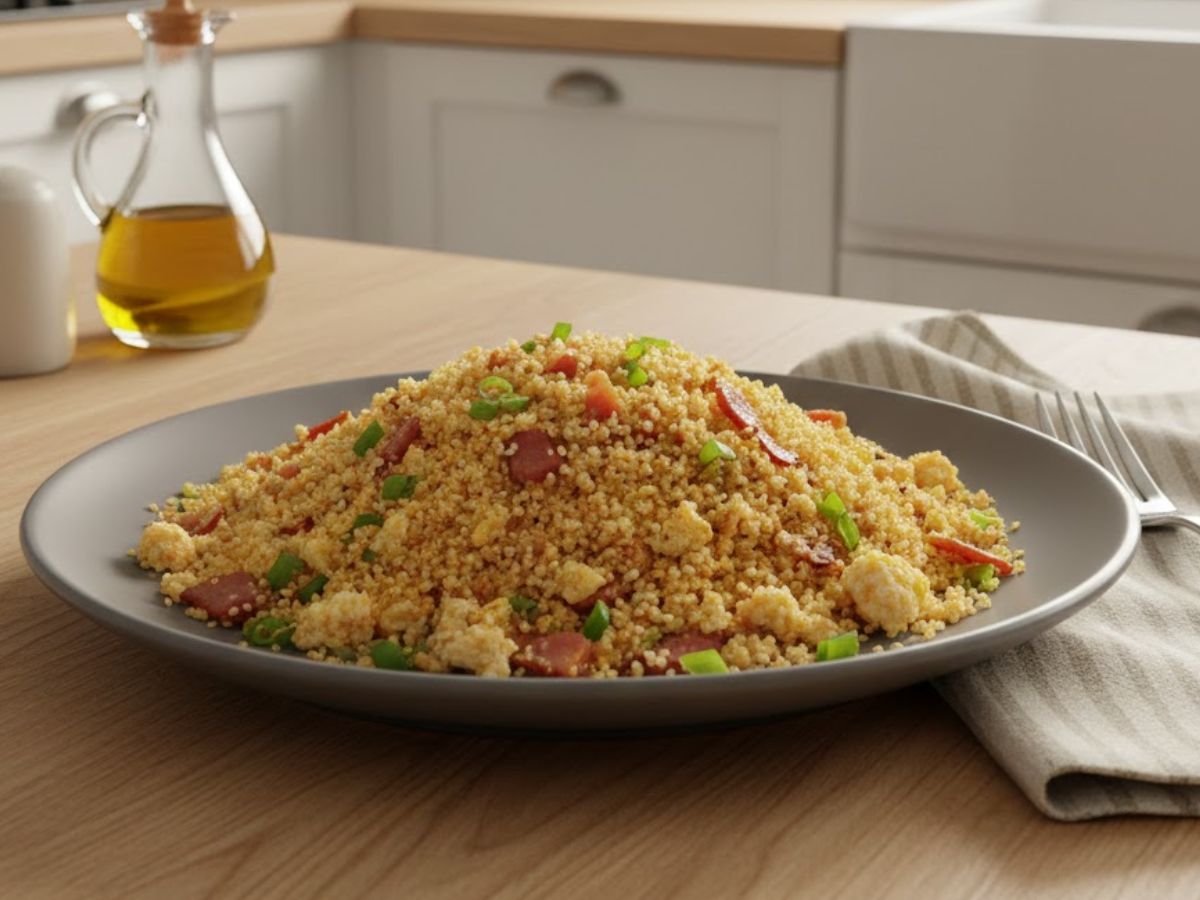
With substitutions for kitchens outside Brazil
Jump to RecipeFarofa Simples Brasileira (Do Dia a Dia)
Brazilian farofa is not a celebratory dish by default. In everyday Brazilian cooking, it’s a quiet side — something that appears almost automatically next to rice, beans, and meats, without needing explanation.
At home, farofa is fast, adaptable, and intentionally simple. It’s rarely the center of the plate. Instead, it adds texture, absorbs sauces, and helps complete the meal. Most days, it’s made with just cassava flour, onion, and fat.
Outside Brazil, cassava flour can be difficult or impossible to find. What matters, though, is not the ingredient itself, but the method. This recipe reflects how farofa is actually adapted and cooked in Brazilian kitchens abroad.
About this dish
Farofa exists in countless variations across Brazil, but the everyday version follows a clear logic: a neutral, lightly toasted base that supports the rest of the meal.
In Brazilian home cooking, farofa is rarely heavily seasoned. Bacon, eggs, or vegetables may appear when available, but the simplest version — onion, oil or butter, salt — is considered complete.
Outside Brazil, farofa is often treated as something exotic or overly crunchy. At home, it’s softer, subtler, and meant to blend naturally into the plate rather than compete with it.
Before you start
The ideal texture is loose and lightly toasted — never pasty, never greasy, never overly crunchy.
Farofa should:
- move freely when stirred
- remain crumbly on the plate
- absorb sauces without becoming soggy
The type of flour matters less than how it behaves once toasted. Heat control and fat balance are more important than the exact ingredient used.
For kitchens outside Brazil: substitutions & adaptations
Cassava flour (farinha de mandioca) is traditional, but farofa abroad is often method-based rather than ingredient-based. Brazilians outside Brazil have long adapted farofa using what’s locally available.
Common substitutes used by Brazilians abroad
Cornmeal (fine or medium): One of the closest everyday substitutes. Toast gently to avoid grittiness. Works well with rice, beans, and stews.
Polenta (instant or quick-cook): Very practical. Requires slightly more fat and gentle heat. Texture is softer but functional.
Semolina or couscous (wheat-based): Common in Europe, the Balkans, and North Africa. Produces a fine, sandy texture that pairs well with saucier dishes.
Oats (quick or fine flakes): Frequently used in Brazilian kitchens abroad. Softer, slightly nutty, and especially common with chicken or eggs.
Nestum or cereal flakes: Used by Brazilians where available. Neutral flavor and quick toasting. Texture is fine and light.
Breadcrumbs (plain, unseasoned): A fallback option. Toast briefly to avoid drying. Best with meats and stews.
Panko (Japanese breadcrumbs): Produces a lighter, airier farofa. Crush lightly before toasting to avoid excessive crunch.
Crushed crackers or plain biscuits: Last-resort option. Neutral crackers only, toasted gently.
How to adapt the method
Regardless of the base:
- Toast on medium-low heat
- Add the “flour” gradually
- Adjust fat as needed
- Stop cooking as soon as lightly golden
If it adds texture, absorbs sauce, and feels natural on the plate, it works.
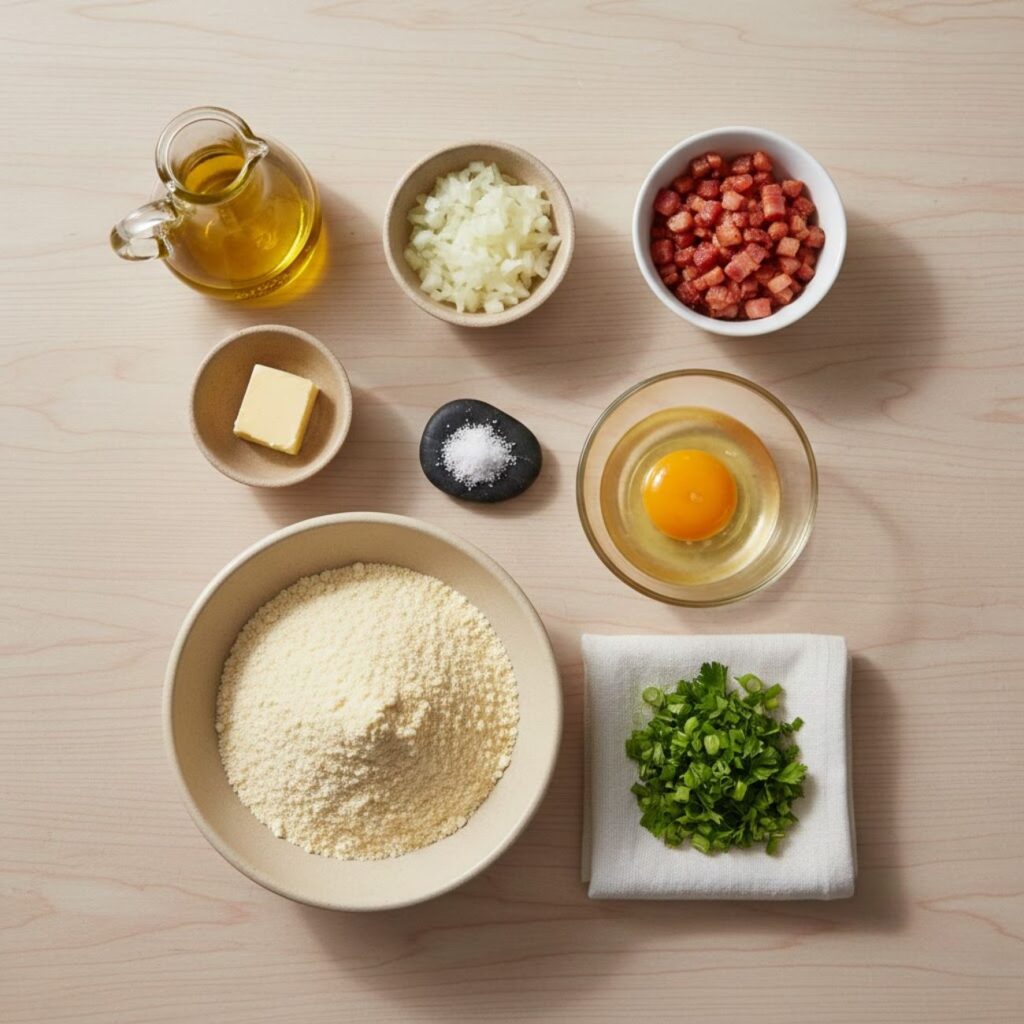
Ingredients prepared before cooking
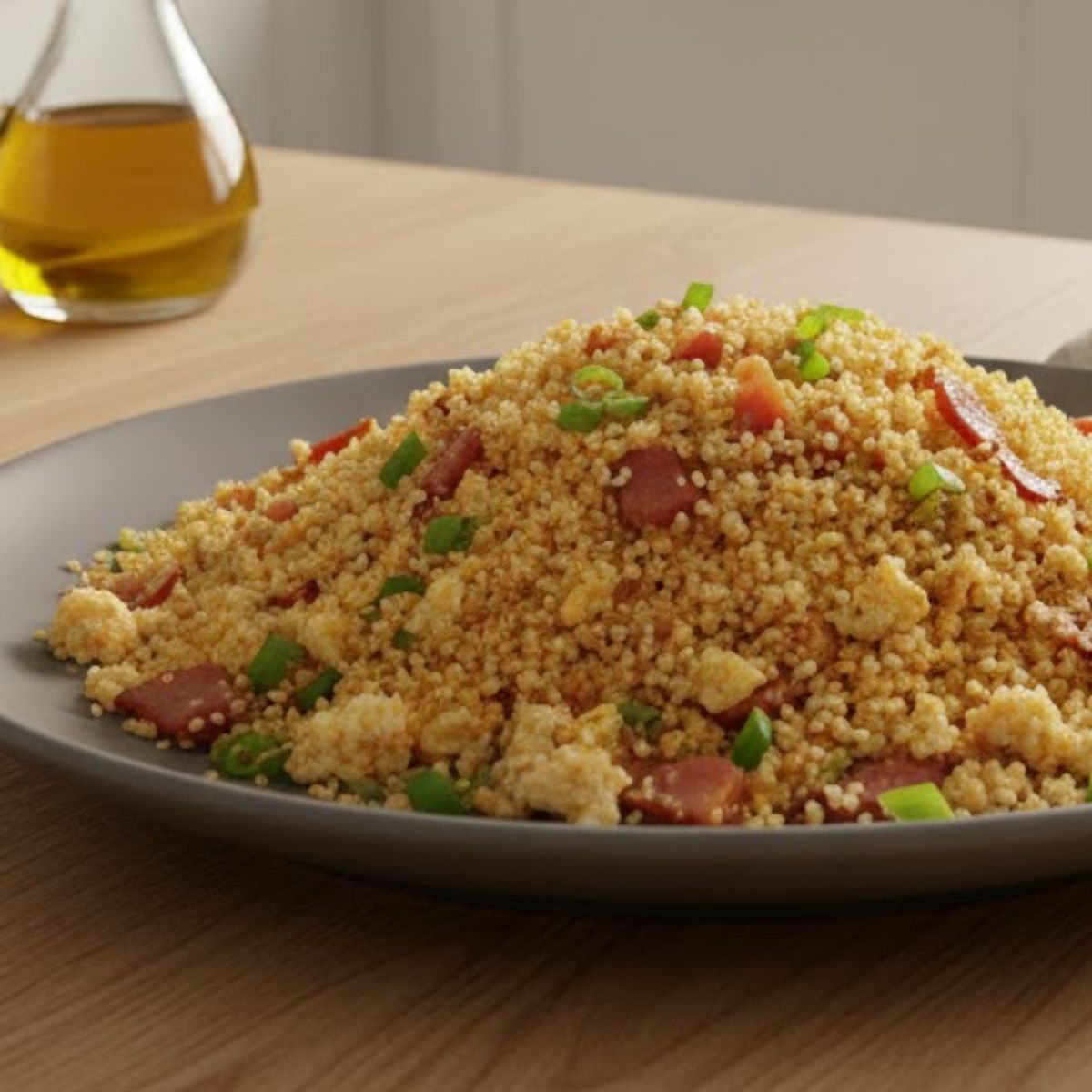
Brazilian Simple Farofa (Everyday Style)
Ingredients
Method
- Heat the oil or butter in a wide pan over medium heat.
- Add the onion and cook until soft and lightly golden.
- Reduce heat to medium-low and add the flour gradually, stirring constantly.
- Toast for 5–7 minutes, stirring, until lightly golden and fragrant.
- Season with salt and adjust texture with a small amount of extra fat if needed.
- Remove from heat once evenly toasted.
Notes
- Always toast farofa slowly to avoid burning.
- Add-ins should be cooked separately and folded in at the end.
- Farofa continues to toast slightly from residual heat after cooking.
- Neutral seasoning is intentional — farofa supports the meal, it doesn’t lead it.
Equipment used
Affiliate links may be used. No additional cost to the reader.
How Brazilians usually serve this
Simple farofa is most commonly served with Brazilian white rice and beans. It also appears alongside grilled meats, chicken stews, and everyday beef dishes.
Some people mix it directly into rice or beans; others keep it on the side. Both are common and unremarkable choices in Brazilian homes.
Storage
Best eaten fresh. Can be stored for up to one day at room temperature or refrigerated for two days. Reheat briefly in a pan if needed.
Discover more
base recipes basic recipes beans beef brazilian base recipes brazilian basics brazilian beans brazilian classics brazilian fish brazilian food brazilian tomato sauce brazilian vegetables Chicken chicken recipes chicken stock coconut milk recipes comfort food cooking foundations cooking outside brazil easy recipes everyday cooking family meals fish stew ground beef home-style cooking home cooking meal prep moqueca one-pan meals one-pot meals pantry staples refried beans rice and beans rice dishes sautéed vegetables shredded chicken side dishes simple recipes simple sauces simple sides stroganoff sunday lunch tomato sauce vegetable dishes weeknight dinners
About The Brazilian Table
Practical Brazilian food, adapted for everyday kitchens outside Brazil.